I should be working on my book, but I decided to come play here first. I took down the little dealy on the side showing my progress because it was too much work. LOL! But I'm excited to tell you I'm at almost 50k with this book. That's just past the halfway mark. Shooting to be finished by the end of August so I can have a few weeks to edit before the ACFW Conference in September.
I think so many of us have our sites focused on that conference, getting ready, wondering what to expect. Seems we put so much pressure on ourselves to get our babies (manuscripts, just want to be sure we're on the same track) polished and ready to pitch.
In the meantime, so much is happening in the industry. Puslishers seem to be changing hands faster than stocks on NASDEQ. A feeling of uncertainty is settling over many of the writers I know as we watch more and more doors close.
It is truly a time of change. Which makes it even more important to keep an ear tilted in God's direction. Such a time can be so discouraging, yet if we are working for Him, we have to trust in His plan, right? Gives a whole new meaning to the word perseverence. (And did you notice the word severe in the middle of that word?)
I'm digging my feet in. I've come this far. Not going to quit now. This road is taking a whole lot more rubber than I ever anticipated. When I doubt (and yes, I'm wondering about the whole writing gig myself at the moment, where it's heading, and how I'm going to ride it out) I go back to the moments that confirmed this writing journey. Thankfully, I wrote several down so I can go back and read them. Just like a writer.
And that's what I am, a writer.

Tuesday, August 08, 2006


Sunday, August 06, 2006
Why to Have Business Partners
A friend recently asked me the benefits to having business partners. I thought it was a funny question and came up with a top ten list (Ron, you are my inspiration). I've always loved top ten lists. I guess I have David Letterman to thank. Always the best part of his show.
So, here we go.
1. To make your life hell.
2. Just to spice things up a bit.
3. To be used as punching bags at will.
4. Fodder for your next book.
5. A way to excuse the stupidness in the world.
6. To make you look good.
7. To show that there really is a God and that forgiveness can be a minute by minute effort.
8. In case you get bored.
9. To show you really are credible and that you have people to vouch for you (just don't tell anyone no one will vouch for them).
And finally, the one she found the most appalling,
10. To make more money.
LOL! It is what it is.
So, here we go.
1. To make your life hell.
2. Just to spice things up a bit.
3. To be used as punching bags at will.
4. Fodder for your next book.
5. A way to excuse the stupidness in the world.
6. To make you look good.
7. To show that there really is a God and that forgiveness can be a minute by minute effort.
8. In case you get bored.
9. To show you really are credible and that you have people to vouch for you (just don't tell anyone no one will vouch for them).
And finally, the one she found the most appalling,
10. To make more money.
LOL! It is what it is.
Friday, August 04, 2006
Book Winner!
Hey there! How ya doin? Where you been all my life? LOL!
Okay, seriously, the winner of the autographed copy of Shelley's book, A Sounding Brass, is...
(insert drum roll here...)
LYNN DONOVAN!
Send me your snail mail info, Lynn. You just won yourself a book.
On a side note, leave me comments about why you like to read blogs and what you look for in a blog. Is it the content, contests, author interviews, or the personal gut wrenching sharing thingy? What would you like to to see more of? Less of? Love to hear from ya!
Okay, seriously, the winner of the autographed copy of Shelley's book, A Sounding Brass, is...
(insert drum roll here...)
LYNN DONOVAN!
Send me your snail mail info, Lynn. You just won yourself a book.
On a side note, leave me comments about why you like to read blogs and what you look for in a blog. Is it the content, contests, author interviews, or the personal gut wrenching sharing thingy? What would you like to to see more of? Less of? Love to hear from ya!
Monday, July 31, 2006
Edgy Fiction and Chickens with Shelley Bates
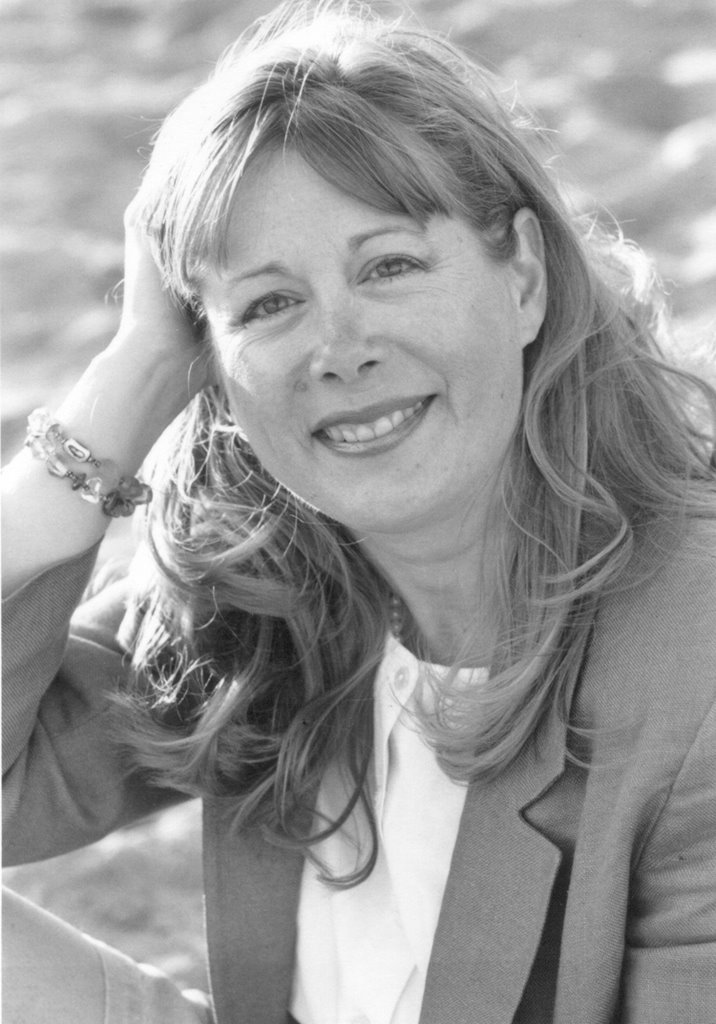 Today we have the edgy, the wonderful, the magnificent chicken-raising author, Shelley Bates. (Yes, chickens. We’ll come back to that.) Shelley has a B.A. in Creative Writing from the University of California at Santa Cruz and an M.A. in Writing Popular Fiction from Seton Hill University in Pennsylvania. She sold her master's thesis to Harlequin after she graduated in 2002, and it subsequently became a double finalist in the 2004 National Readers Choice Awards.
Grounds to Believe, her debut novel from Steeple Hill Books and the first book in her Elect Trilogy, won the 2005 RITA Award for Best Inspirational Novel of the Year from the Romance Writers of America. The second book in the trilogy, Pocketful of Pearls, is a 2006 RITA Award finalist, and the last book, A Sounding Brass, has just been released by FaithWords (formerly Warner Faith).
DM: Shelley, thank you so much for being here. You’ve earned the title of “edgy” with your books. Can you tell us why and what that means for your books?
SB: Publisher’s Weekly started it by classifying me with a few other books under a headline of “Faith on the Edge.” So hey, who am I to argue? I think we call something “edgy” if it’s on a subject we’ve been conditioned not to talk openly about. I talk about the toxic church, which can be controversial and painfully personal for many people.
DM: Your books have deep issues that really pull readers in and make them think. Do you write with that goal in mind or does it organically occur as you begin to plan your stories?
SB: That’s me—a deep thinker. Not! My books come out of my own experience, which led to a lot of soul searching and to very personal conversations and interviews with people. The central theme I write about always involves a woman breaking out of structures that other people have imposed on her. I think it’s a theme that many women deal with in their day-to-day lives, and many don’t know how to change the thinking that keeps them in the cage. The characters in my books illustrate what happens—for good or ill—when you try to escape the structures made of rules and focus solely on your relationship with God.
DM: You openly share your experience with a “toxic” church and even brought this issue into your books. How has this past experience affected your writing and your stories? Do you feel God has put you in this time and place to help others see the difference between a healthy church and a toxic church?
SB: I think He must have. I’m getting opportunities and honors that would never have happened if God hadn’t been in on it.
DM: What’s your secret to keeping a balanced writing life?
SB: I used to manage time for a living as an executive assistant to a busy VP, so I’m used to parceling out my day in chunks. This chunk goes to e-mail and promotion, this one to the day job, this chunk is sacred to writing, this chunk goes to having a cold drink and playing with the chickens. However, there’s a difference between being able to portion out chunks and actually getting tangible work done in them. I’m still working on that part. But I guard my writing time fiercely. I think we have to value our time—it’s an indication of how much we value our work.
DM: What comes first for you, the story or the characters?
SB: My books always seem to start with an image—like a picture or a still shot from a movie—that becomes the opening scene. It has people and objects and buildings in it, and I have to figure out why they’re there, who they are, and what they’re going to do about it. For instance, Pocketful of Pearls began with the image of a woman confronting a homeless man on the back porch of her house. It was dark, lit by a bare lightbulb overhead, and the house was full of people. I learned that the people were there for the funeral of her father, and the homeless man turned out to be the hero who saves the heroine’s life in more ways than one. But it all began with that one dark image.
DM: How do you develop your characters?
SB: Uh … I guess “I don’t know” isn’t the answer you’re looking for, is it? They seem like memories of people I know, if that makes sense. I usually give them a central characteristic (for instance, in A Sounding Brass she’s a big-city girl born and raised in a small town, he’s a smart-mouth cop) and then work inward and outward from there. How would his dialogue sound if he’s always quipping and fencing with people verbally? How would she relate to people around her if she feels they’re trapping her in the town? Stuff like that.
 DM: A Sounding Brass is the third book in the Elect Trilogy. How did this story come about?
SB: Like Pocketful of Pearls, it’s based on true events (believe me, you can’t make this stuff up). A radio evangelist came to the town my cousins live in, and during the course of his "ministry," managed to defraud the entire town to the tune of hundreds of thousands of dollars. I cut that article out of the paper right away, because the pricking of my thumbs told me it would make a great basis for a story.
DM: What kind of research did you have to do?
SB: I spent an evening at 91.5 KKUP here in Santa Clara, which is a small independent radio station that I basically lifted in its entirety and put in my fictional town of Hamilton Falls—right down to the coffee pot. The DJ (Jackie, who hosts the Thursday night bluegrass and folk show) showed me how all the decks and players worked, how the sound mixer worked, and let me take pictures and make diagrams. Then I took the station manager to dinner, and she told me how you would launder money through the station. It was great.
DM: OK, I’ve made everyone wait long enough. Tell us about your chickens. How did you wind up having chickens for pets?
SB: This bird walked into my yard one day … No, really. She did. She walked in and announced she was staying, so my dh built her a coop. That was Electroclux, an Isa Brown. And since chickens are flock birds, she was getting depressed without a companion, so I went to the animal shelter and saw this forlorn little bird sitting in a cage with its wings all droopy, going, “I hate my life.” So of course I took her. That was Cocoa Puff, an Ameraucana. Then a clerk at Gene’s Fine Foods brought me a hen in a box who had been living on their refuse pile. That was Genie, a Black Australorp. Then some folks down the road said they were moving and could I take their birds … That was Schatzi, Penny, and Blue, all Ameraucanas who lay blue and green eggs. Currently I have eight, including the Peepers, who are lovely Golden Comet pullets. They know their individual names (Dinah and JoJo) but they’ll come as a pair (Peepers) when you call them, too.
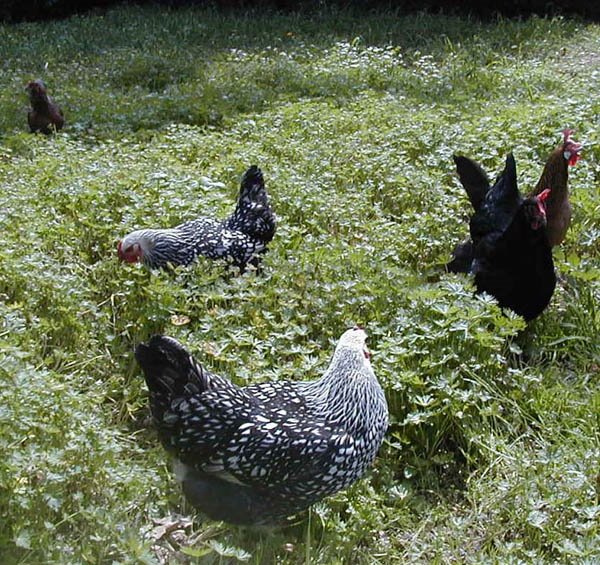
Chickens are smart. They have the intellect of an 18-month-old human, so they can learn language. Mine know about a dozen English phrases, and they all know and respond to their names. They’re very affectionate, too. When I got back from the Faith-Building Fiction book tour last month, I couldn’t sit down without a bird being on my lap and one on each shoulder. They just wanted to let me know they’d missed me and were glad I hadn’t been eaten by a predator. They make great pets, and the eggs are a fringe benefit. If you open yourself to chickens, they will come.
DM: Shelley, thank you so much for sharing yourself and your wonderful books with us. I love your stories.
SB: Thanks, Dineen—I always appreciate an opportunity to talk books and birds!
Be sure to check out Shelley’s fabulous website, too, for more information about her books and her chickens! Leave a comment for a chance to win a signed copy of Shelley’s latest book, A Sounding Brass.
Wednesday, July 26, 2006
A Story Too Difficult To Tell
Ever had a story you just couldn't tell? I don't mean gossip. I mean a story sitting in your head, but you just can't seem to get it down on paper the way you want to. I used to go through this with art. I could see the image clearly in my head, but what wound on paper was always a far cry from the image in my mind.
At least with writing , it's a sense of what the story is to be and not an exact replica. I have freedom to take the seed of an idea and grow it on paper. But what about those seeds that turn into a fully bloomed flower in your mind? You write and write and worry whether or not the words pouring on the page do a fair representation of what your mind has created. With art you always had a pictoral representation to judge. With writing you have words which, to you, may portray exactly what you want, but to another, not so much.
I guess art can be as subjective as writing. What we feel is a masterpiece may be hailed worthless trash by a random critic or doofis. (Hey, you call my art trash, you're a doofis.) But at some point I think we have to trust the creative process and recognize it as God's gift. He's the ultimate creator, and we are made in his image, to create, to love, to grow. That's a hard place to get to. Our egos tend to get in the way.
The struggle is imminently present. How do I get the words on the page, and how do I know they are the best they can be? I can worry myself in circles with this and write not a single word. See the vicious circle? Could this be what is called writer's block? I don't know.
I do know the page is there, and it's not blank. I'm pushing through it, putting words to the page. They may not be grand, but they at least eliminate some of that glaring white space.
At least with writing , it's a sense of what the story is to be and not an exact replica. I have freedom to take the seed of an idea and grow it on paper. But what about those seeds that turn into a fully bloomed flower in your mind? You write and write and worry whether or not the words pouring on the page do a fair representation of what your mind has created. With art you always had a pictoral representation to judge. With writing you have words which, to you, may portray exactly what you want, but to another, not so much.
I guess art can be as subjective as writing. What we feel is a masterpiece may be hailed worthless trash by a random critic or doofis. (Hey, you call my art trash, you're a doofis.) But at some point I think we have to trust the creative process and recognize it as God's gift. He's the ultimate creator, and we are made in his image, to create, to love, to grow. That's a hard place to get to. Our egos tend to get in the way.
The struggle is imminently present. How do I get the words on the page, and how do I know they are the best they can be? I can worry myself in circles with this and write not a single word. See the vicious circle? Could this be what is called writer's block? I don't know.
I do know the page is there, and it's not blank. I'm pushing through it, putting words to the page. They may not be grand, but they at least eliminate some of that glaring white space.
Subscribe to:
Posts (Atom)